Software
PV-Elite
Pressure vessel and heat exchanger design to ASME, EN 13445 and PD 5500.
Quick answer
Structural Engineering Services supports PV-Elite projects worldwide with pv-elite vessel design, pressure vessel design, heat exchanger mechanical design, separator & scrubber design — delivered by senior engineers on licensed software to international codes.
- Publisher
- Hexagon
- Discipline
- Pressure vessel & heat exchanger design
- Licensing
- Commercial seats, in-house only
Capability at a glance
Our PV-Elite bench strength
Every figure below is what we run in production — licensed seats, supported versions and the scale we deliver at, so you can size us against your package before you enquire.
5
Licensed seats
PV-Elite with CodeCalc component analysis
2019–2024
Versions supported
Including the code edition your project was frozen on
6 m ID
Largest vessel designed
Columns to 60 m tangent-to-tangent, up to 300 barg
5 codes
Routine code coverage
ASME VIII Div 1 and 2, EN 13445, PD 5500, IS 2825
3–5 days
Typical vessel
Calculation set, GA and nozzle allowables per vessel
Deliverables
What we produce in PV-Elite
PV-Elite gives us the code arithmetic; the engineering is in the choices around it — head type, course split, nozzle reinforcement strategy and the material that keeps the vessel economic and buildable.
Scope your deliverablesMechanical design calculation
Shell, head, cone and transition thickness to ASME VIII Div 1, Div 2, EN 13445, PD 5500 or IS 2825, with MAWP, MAP and corroded and uncorroded cases.
Nozzle schedule & reinforcement
Every nozzle checked for area replacement, weld strength path and minimum spacing, with flange rating and external load capacity tabulated.
Local load & WRC checks
WRC 107/297/537 local stress at nozzles, lugs and attachments against the real piping loads coming out of CAESAR II.
Supports & external loads
Saddle (Zick), skirt, leg and lug design with wind to ASCE 7, EN 1991-1-4 or IS 875 and seismic to ASCE 7 or IS 1893, including base ring and anchor bolts.
Weight, CG & lifting data
Empty, operating, test and shipping weights with centre of gravity, plus lifting-lug and trunnion checks for the erection contractor.
GA drawing & datasheet
General arrangement with nozzle orientation, plus the vessel datasheet and material summary for enquiry, procurement and U-1 preparation.
Interoperability
PV-Elite file formats we work with
The vessel sits between process, piping and fabrication. We keep the loop closed: piping loads in, allowables back out, and a geometry definition the detailer can model from.
| Format | Direction | How we use it |
|---|---|---|
| Native model (.pvdb) | We deliver | Editable model handed over so your team or your inspection agency can re-run any case or revision. |
| Nozzle loads from CAESAR II | We import | Real piping loads used in the WRC check, replacing conservative placeholder allowables. |
| Nozzle allowable tables | We deliver | Published back to the stress engineer as the acceptance table for the piping analysis. |
| DXF / DWG | Both ways | Process sketches and nozzle orientation in; generated vessel outline out for detailing. |
| Word / PDF report | We deliver | Indexed calculation set formatted for client, third-party inspector or notified-body review. |
| Excel datasheets | Both ways | Process datasheet inputs in; weight, nozzle and material summaries out for procurement. |
| STEP / Inventor geometry | We deliver | Validated geometry passed to fabrication detailing and, where needed, to ANSYS for a Div 2 Part 5 assessment. |
Working in a format that is not listed? Send a sample file with your enquiry — we confirm every exchange route before kick-off rather than discovering it at issue.
How we work
Our PV-Elite workflow
Each stage has a defined input, output and owner, which is what keeps multi-phase packages predictable across time zones.
- 1
Process datasheet review
Design pressure and temperature, fluid, corrosion allowance, radiography, PWHT, impact-test requirement and lethal-service flags all confirmed in writing.
- 2
Material & geometry selection
Head type, course split against plate widths, nozzle layout and material grade chosen for cost and for what the fab shop can roll and weld.
- 3
Thickness & nozzle design
Internal and external pressure, stiffening rings, reinforcement pads and flange ratings designed to the governing code clause.
- 4
Supports, wind & seismic
Saddle, skirt or leg design with the full external load set, including erection and hydrotest conditions.
- 5
Local stress & flange checks
Quality gateWRC nozzle checks against actual piping loads and flange leakage review; anything beyond code rules is escalated to a Div 2 Part 5 FEA.
- 6
Optimisation review
Thickness, material and support configuration re-run as a set — a thinner shell that needs a heavier saddle is not a saving.
- 7
Report, GA & handover
Calculation set, GA drawing, nozzle allowables and weight data issued together for approval and fabrication detailing.
One stage is a formal quality gate — work does not move forward until a senior engineer signs it off, which is why revisions after issue stay rare.
Choosing a platform
When PV-Elite is the right choice
We run all twelve packages in-house, so we have no reason to push you towards one. Use this to check that the platform matches the deliverable you actually need.
Choose PV-Elite when
- Code-rule design of drums, columns, reactors, separators, air receivers and shell-and-tube exchangers.
- A design must be demonstrably compliant to ASME VIII, EN 13445, PD 5500 or IS 2825 for an inspector or notified body.
- Wind and seismic govern a tall vertical vessel or a skirt-supported column.
- You need MAWP, a re-rating or a quick thickness and material optimisation study on an existing vessel.
We would use something else when
Still unsure? Send the drawings and the deliverable you need — we will tell you which platform we would run it on, and why, before quoting.
Relevant services
Our PV-Elite services
PV-Elite Vessel Design
Performing PV-Elite calculations for shells, heads, nozzles, saddles and skirts.
ExplorePressure Vessel Design
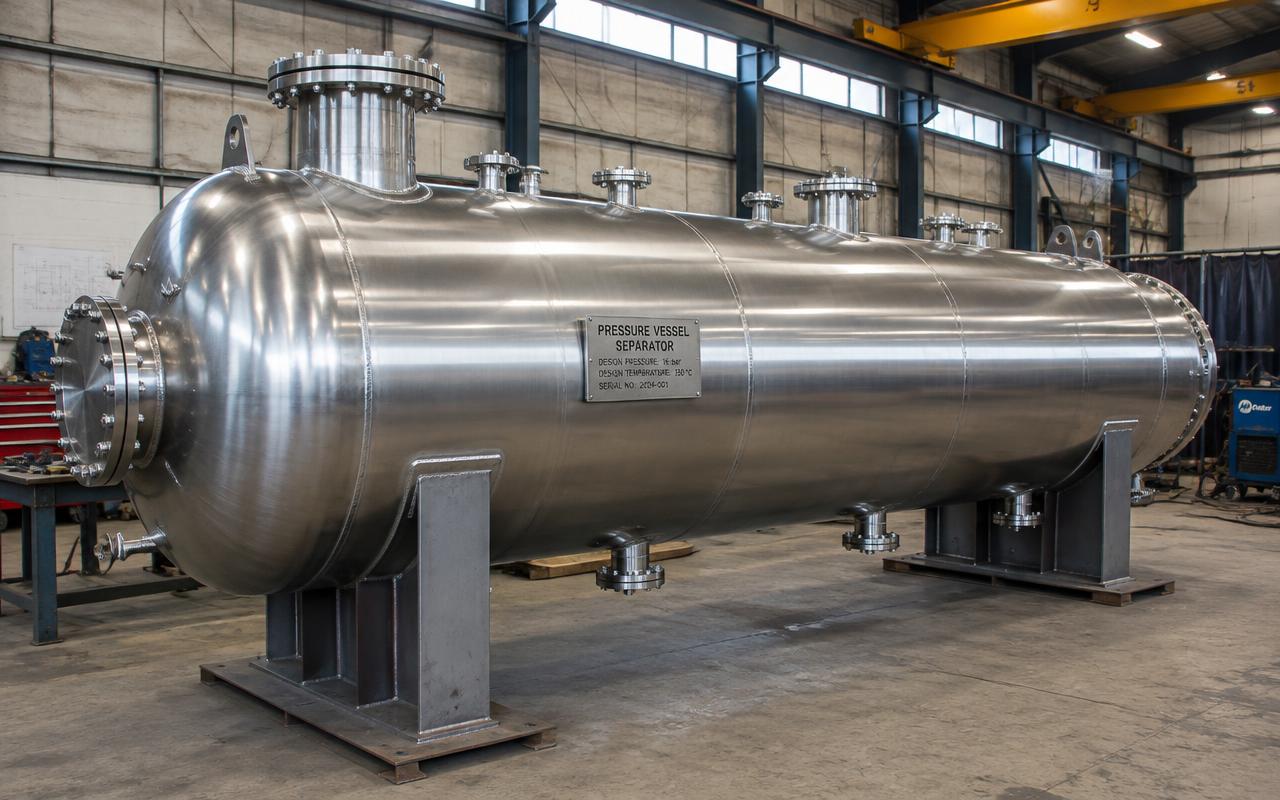
Designing separators, drums, reactors and columns to ASME, EN or PD codes.
Explore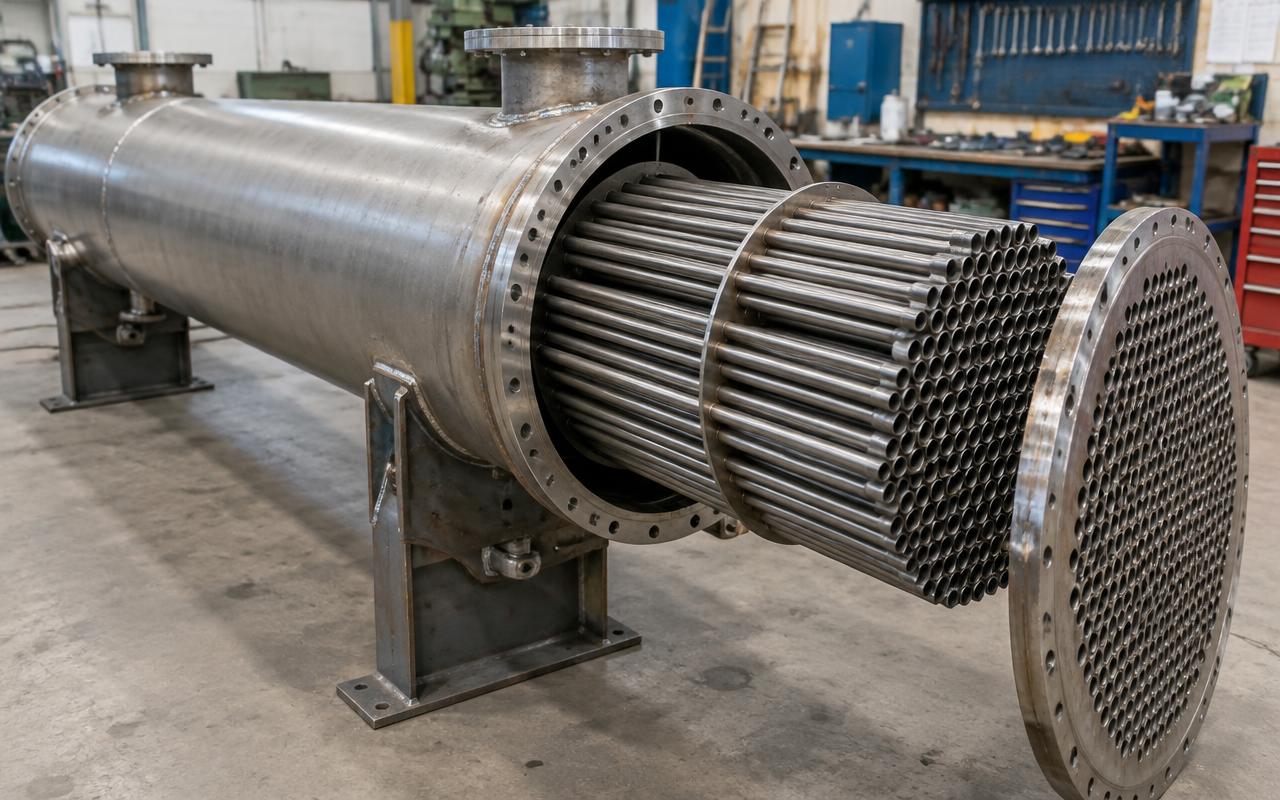
Heat Exchanger Mechanical Design
Designing floating head, fixed tubesheet, U-tube, stacked and kettle exchangers per TEMA.
ExploreSeparator & Scrubber Design
Designing inlet separators, knock-out drums, scrubbers and filters for oil & gas.
ExploreDirectory
PV-Elite work by market
Pick the market your project is built in. Every page sets out the governing codes, units and delivery window we work to there.
8 markets
Start your project
Send your drawings. Get a quote in 24 hours.
Free, no-obligation proposal from a senior engineer.