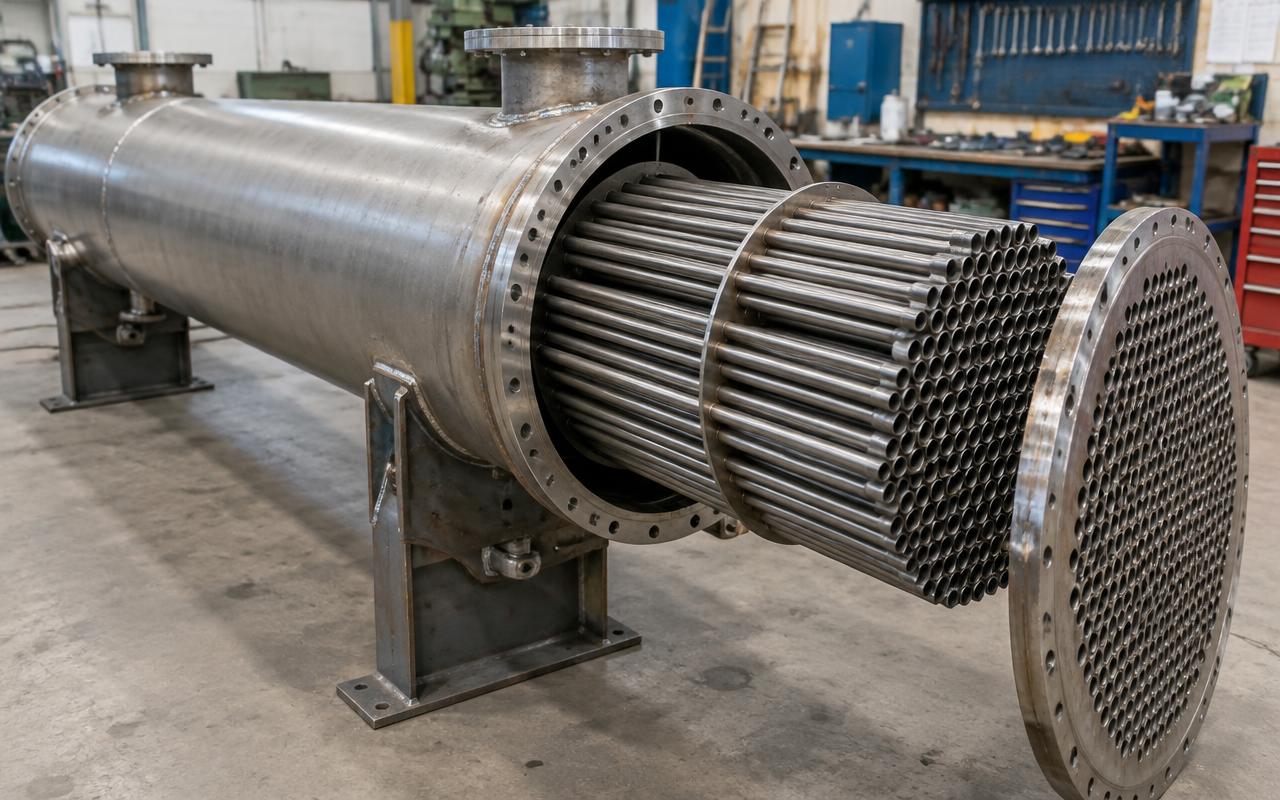
Quick answer
In short, heat exchanger mechanical design means designing floating head, fixed tubesheet, U-tube, stacked and kettle exchangers per TEMA. The work is governed by ASME Sec VIII Div 1/2 and EN 13445, executed on licensed PV-Elite and checked against a documented QA checklist before issue.
What heat exchanger mechanical design actually includes
Heat Exchanger Mechanical Design is the discipline of designing floating head, fixed tubesheet, U-tube, stacked and kettle exchangers per TEMA. In practice a complete scope covers the full chain from design inputs to construction-ready output, not just a single drawing or calculation.
A typical heat exchanger mechanical design package from our team includes: mechanical design calculations, general arrangement drawing, fabrication & detail drawings, nozzle load & local stress checks. Each deliverable is produced on licensed PV-Elite, Codeware COMPRESS, Autodesk Inventor and passes an internal checker review before it reaches you.
How the work is delivered, step by step
Most engagements follow the same five-stage flow, whether the package is a single drawing or a multi-month frame agreement.
- Share inputs — design drawings, specifications and the project schedule.
- Free quote in 24 hours — fixed lump-sum, per-tonne, per-drawing or hourly.
- Model & engineer — built on PV-Elite to ASME Sec VIII Div 1/2.
- Review & approve — internal check, then your comments closed fast.
- Issue for construction — mechanical design calculations and general arrangement drawing issued with revision control.
Which codes and standards govern heat exchanger mechanical design
The governing standard depends on where your project is built. Our teams work daily to ASME Sec VIII Div 1/2, EN 13445, PD 5500, API 650, TEMA, API 660 and to client specifications such as Shell DEPs and major operator standards.
Getting the code basis agreed at kick-off is the single most effective way to avoid late-stage rework — it fixes load combinations, material grades, tolerances and documentation format before modeling starts.
When you need it — and when you don't
You need professional heat exchanger mechanical design whenever the output feeds fabrication, regulatory review or a design-responsibility handover. Early concept sketches and feasibility studies can be lighter, but anything issued for construction should carry a checked, code-referenced package.
If you are unsure which level of detail your project needs, send us your inputs — a senior engineer will scope it honestly, even if that means telling you a smaller package will do.
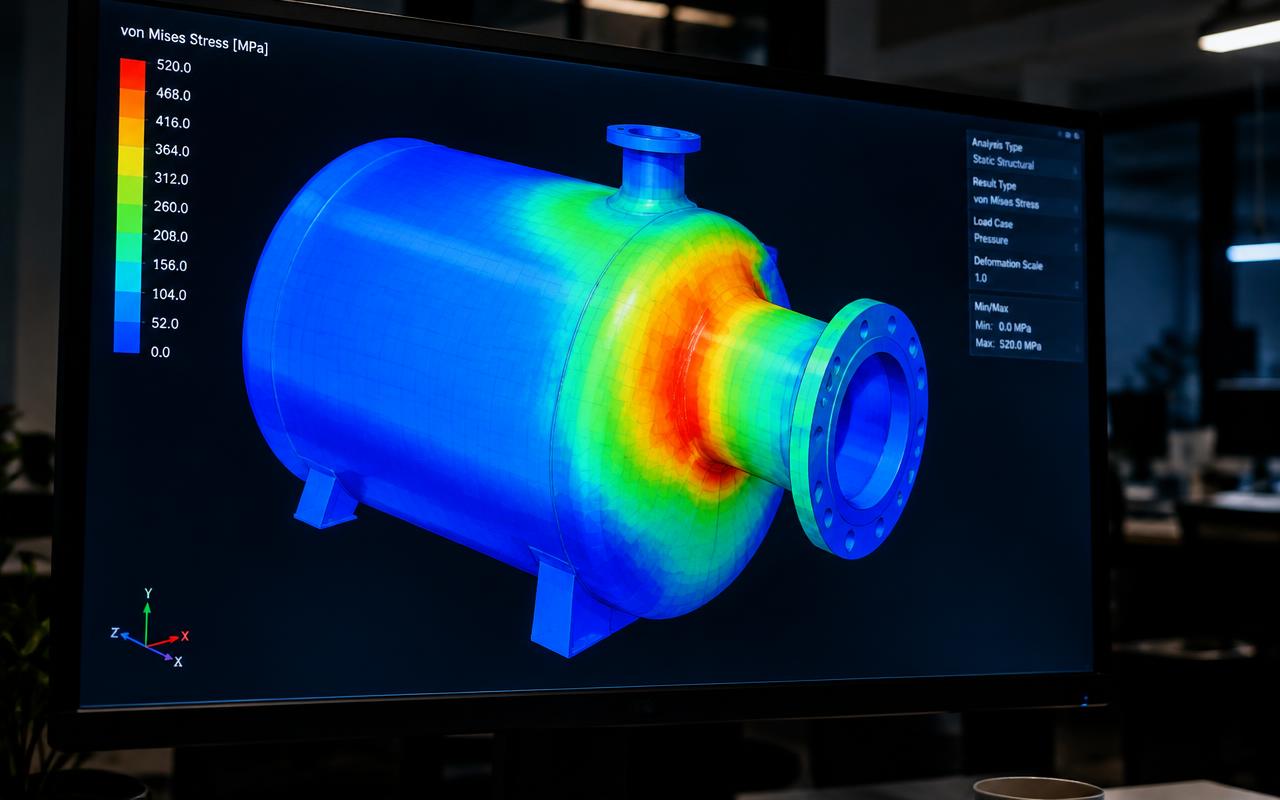
What Is Heat Exchanger Mechanical Design? A Complete Guide: FAQ
What is heat exchanger mechanical design?
In short, heat exchanger mechanical design means designing floating head, fixed tubesheet, U-tube, stacked and kettle exchangers per TEMA. The work is governed by ASME Sec VIII Div 1/2 and EN 13445, executed on licensed PV-Elite and checked against a documented QA checklist before issue.
Which software is used for heat exchanger mechanical design?
We deliver on licensed PV-Elite, Codeware COMPRESS, Autodesk Inventor and issue native files plus PDF, DWG and IFC on request.
Which standards do you follow for heat exchanger mechanical design?
We work to ASME Sec VIII Div 1/2, EN 13445, PD 5500, API 650, TEMA, API 660, plus client specifications such as Shell DEPs and major operator standards.
How long does a heat exchanger mechanical design package take?
Small packages are typically delivered in 3–7 working days; larger scopes are split into phased submissions agreed at kick-off.
How do I get a quote for heat exchanger mechanical design?
Send your drawings or scope through our quote form — a senior engineer reviews them and returns a fixed-price proposal within 24 hours, free and without obligation.