Industries

Tank Farms & Terminals

API 650 tanks, dome roofs, spiral stairs and terminal piping for storage facilities.

Quick answer

Structural Engineering Services supports Tank Farms & Terminals projects worldwide with storage tank design (api 650), storage tank dome roof design, piping layout & routing, steel staircase & handrail design — delivered by senior engineers on licensed software to international codes.

1,200+
Projects delivered
40+
Countries served
60+
In-house engineers
2009
Engineering since

Governing codes

  • API 650
  • API 620
  • API 653
  • API 2000
  • ASME B31.3 / B31.4

Sector challenges

What makes Tank Farms & Terminals engineering hard

A terminal is a repeatable set of structures built dozens of times over. The gains come from getting the standard details, the settlement assumptions and the API compliance exactly right the first time.

Challenge 01

Shell stability and wind girders

Large-diameter tanks are governed by buckling and wind stability, not by hydrostatic pressure.

How we answer it

Shell courses by the one-foot or variable design point method, intermediate wind girder checks and anchorage design to API 650 — with the empty-tank wind case actually checked rather than assumed to pass.
Challenge 02

Seismic sloshing and freeboard

Liquid sloshing adds overturning moment and can tear a floating roof or overtop the shell.

How we answer it

Impulsive and convective components are calculated to API 650 Annex E, freeboard is confirmed, and anchorage and shell compression are checked for the seismic combination.

Challenge 03

Differential settlement

Tanks settle into their foundations over years and drag connected piping with them.

How we answer it

Geotechnical settlement predictions drive shell distortion checks and piping flexibility, with nozzle loads verified against API 650 Appendix P.

Challenge 04

Containment and ageing stock

Bunds, roof seals and corroded shells turn into regulatory problems as a terminal ages.

How we answer it

Containment steel and roof seal arrangements are engineered, and existing tanks are assessed to API 653 with repair or re-rating calculations where the shell has thinned.

Relevant services

Our Tank Farms & Terminals services

Typical assets

Structures and equipment we engineer for tank farms & terminals

From a single assembly to a complete package — the asset types our tank farms & terminals teams work on week to week.

Atmospheric storage tanks

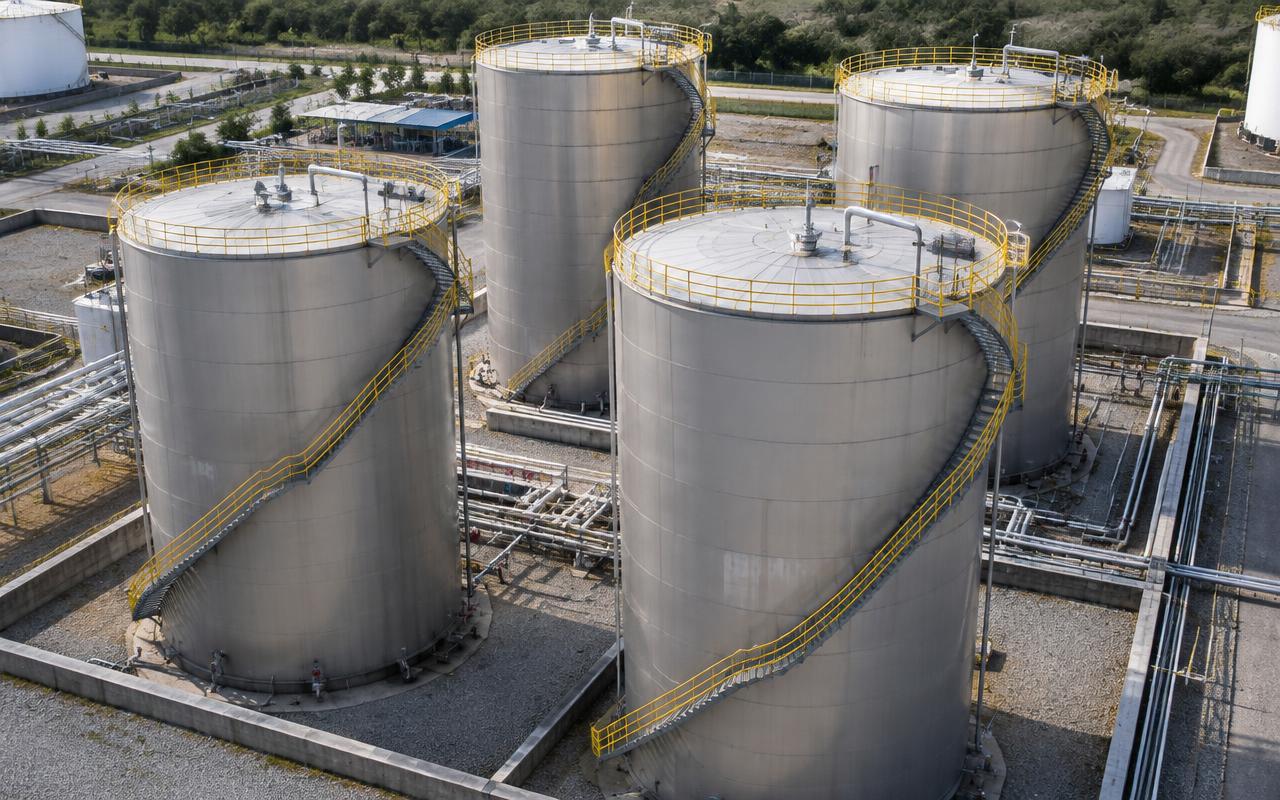
API 650 fixed, floating and internal floating roof tanks with annex requirements.

Dome & cone roofs

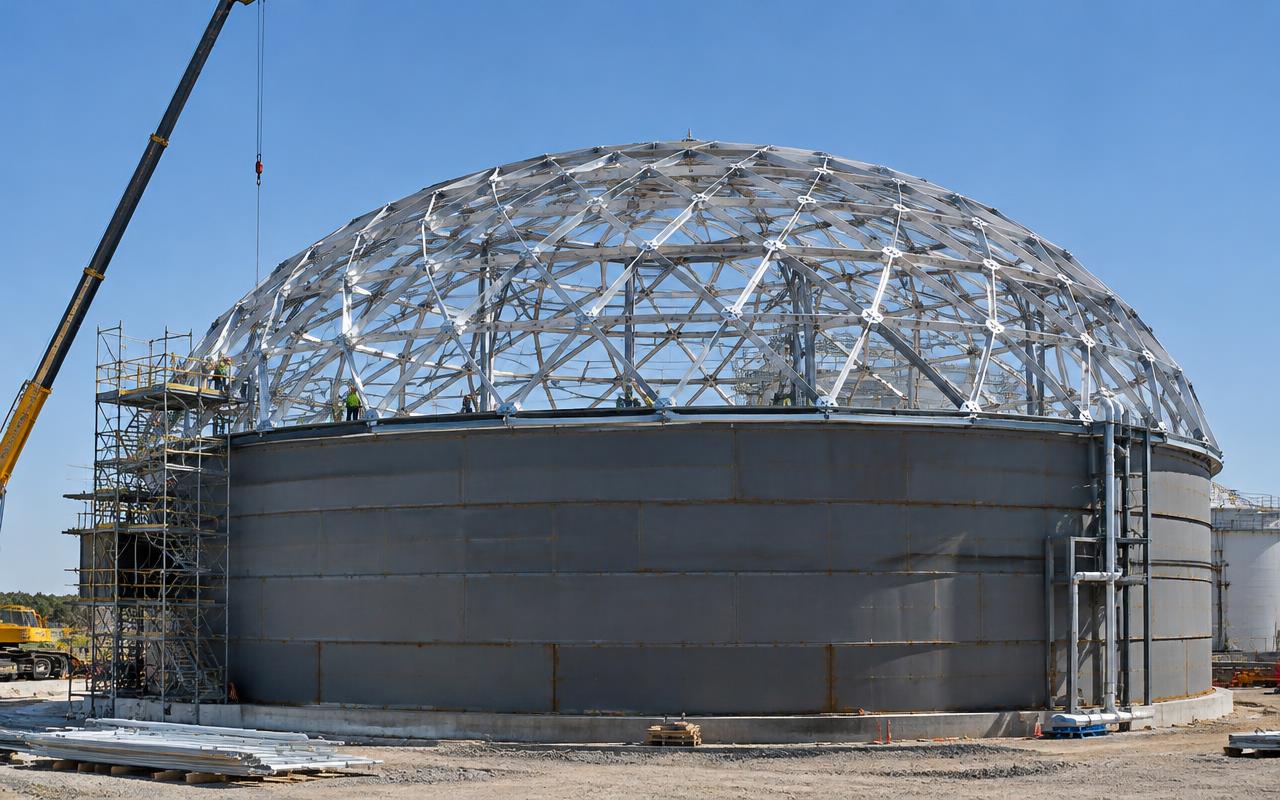
Geodesic aluminium and framed steel domes, rafters and compression rings.

Spiral stairs & platforms

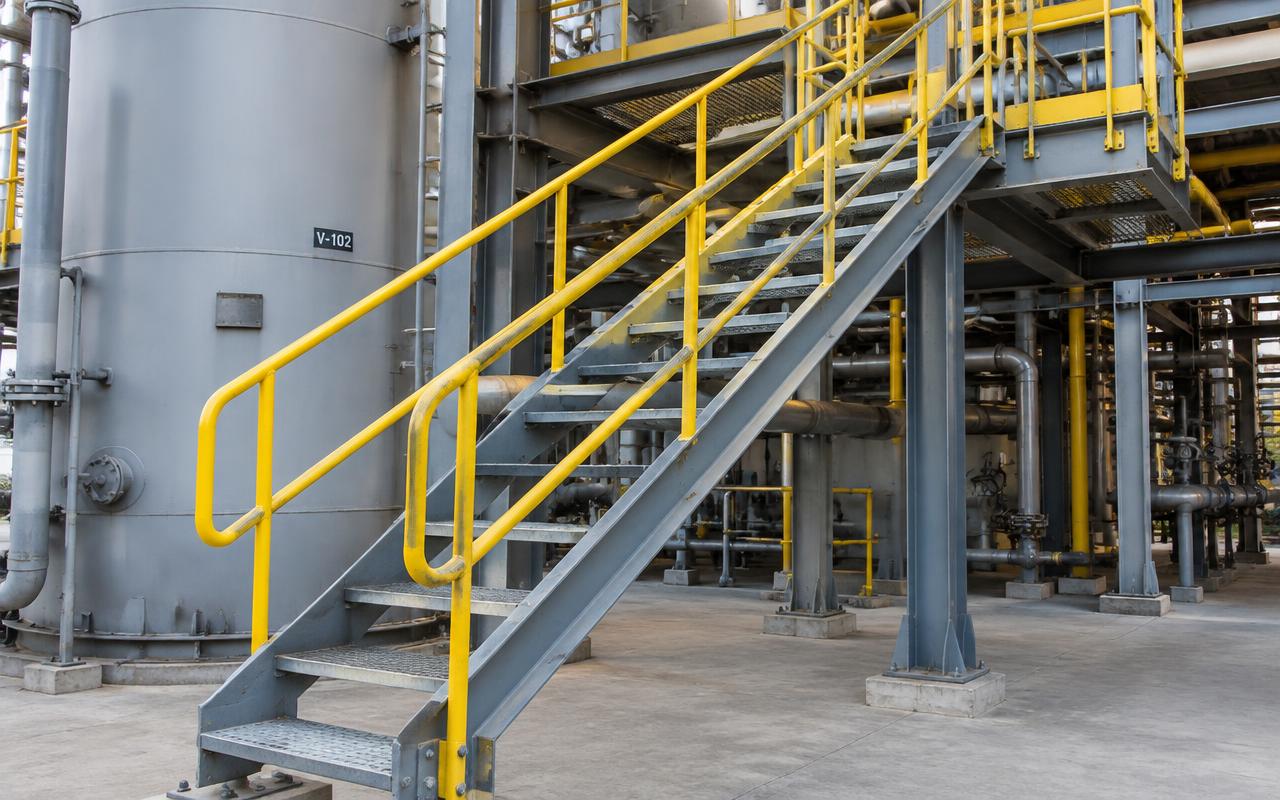
Spiral and straight stairways, gauger platforms and roof access to API and OSHA rules.

Loading gantries

Truck and rail loading gantries, arm supports and access structures.

Terminal piping & manifolds

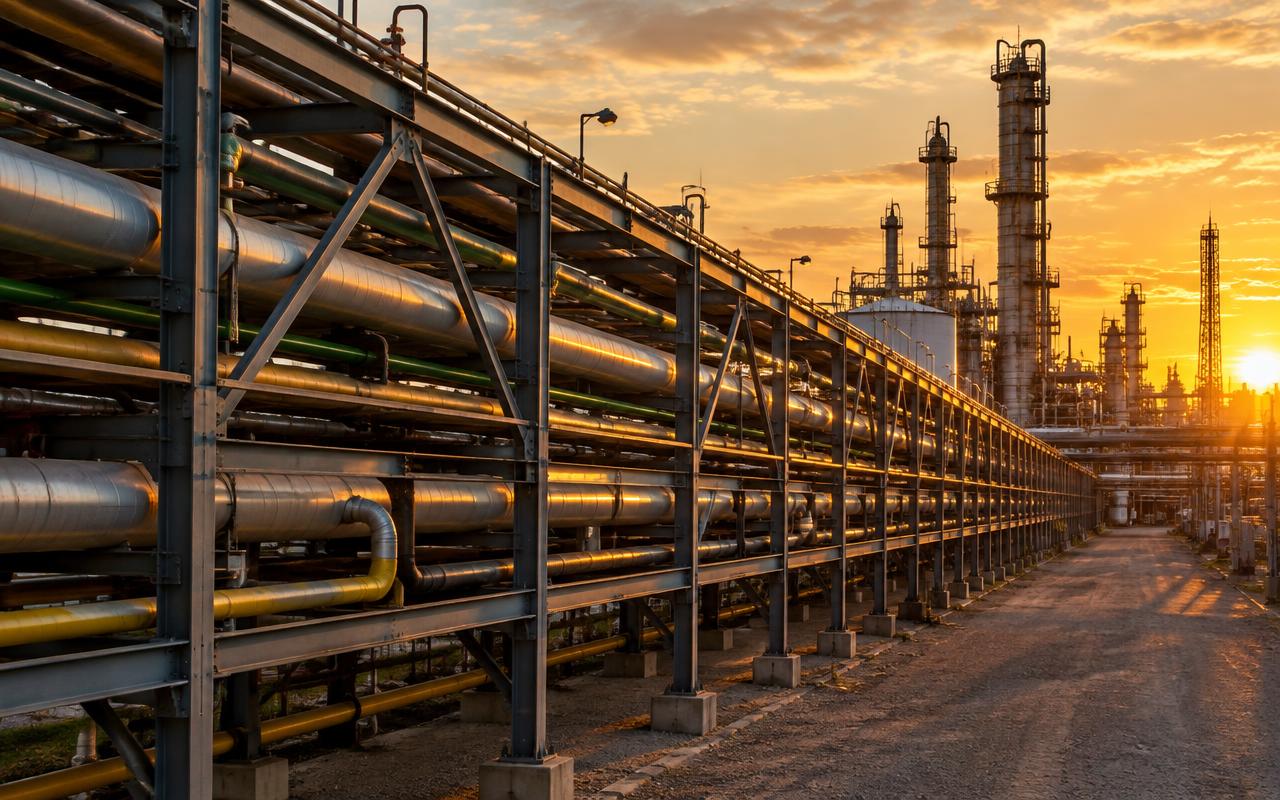
Pump manifolds, interconnecting piping, pig traps and supports.

Bunds & containment steel

Bund wall steel, foam line supports and containment structures.

Codes & specifications

What governs tank farms & terminals design

The base code is only half the story. On tank farms & terminals work the client specification usually overrides it somewhere, so we agree a single reconciled design basis before any calculation starts.

Browse all codes
  • API 650

    The governing standard for welded atmospheric tanks: shell, roof, anchorage and annexes.

  • API 620

    Low-pressure storage where design pressure exceeds the API 650 limit.

  • API 653

    Inspection, repair, alteration and reconstruction — the basis of any re-rating of an existing tank.

  • API 2000

    Normal and emergency venting, which drives roof and vent nozzle design.

  • ASME B31.3 / B31.4

    Terminal and transfer piping, including liquid pipeline sections beyond the fence.

  • NFPA 30 / EN 14015

    Flammable liquid storage spacing, bunding and the European tank route where specified.

Free quote

Not sure what you need?

Send the drawings or datasheets you already have. We will tell you what is missing and quote the scope in 24 hours.

Request a Quote

Project lifecycle

Where we plug into a tank farms & terminals project

Most clients bring us in at detailed design. We can start earlier, or pick a package up mid-stream — here is what you get from us at each stage.

01

Concept & feasibility

Options, preliminary sizing and budget tonnage, before the scheme is frozen.

Tank sizing, farm layout, bund capacity and plot study.

You receive

  • Design basis memorandum
  • Preliminary weight and tonnage estimate
  • Equipment sizing and preliminary datasheets
  • Framing concept and first-pass member sizing
  • Plot plan and routing study
02

FEED / basic design

Design basis, load schedules and layouts good enough to price and procure from.

Tank datasheets, foundation loads, piping routes and gantry arrangement.

You receive

  • Load schedule and design criteria
  • GA drawings good enough to price
  • Mechanical datasheets and nozzle schedule
  • Connection philosophy and tonnage take-off
  • Line list and stress-critical line schedule
03

Detailed design

Full analysis, code checks, 3D modelling and issued-for-construction documentation.

API calculations, shell and roof drawings, stairs and terminal piping for construction.

You receive

  • Checked design calculation report
  • Issued-for-construction drawing set
  • Code calculations, GA and fabrication drawings
  • LOD 400 Tekla model with shop and erection drawings
  • 3D piping model, isometrics and stress reports
04

Fabrication & site support

Shop queries, RFIs and as-built updates while steel is being cut and erected.

Erection sequence, plate rolling queries, hydrotest and settlement survey support.

You receive

  • RFI and technical query log
  • As-built red-line mark-ups
  • Weld maps, NDE plans and data-book input
  • NC/DSTV files and shop fit-up support
  • Spool revisions and field weld mark-ups

Deliverables & handover

What you actually receive

Tank packages are handed over in the order an API inspector expects them: datasheet, calculations, drawings, weld map, then the as-built nameplate information.

DeliverableFormatIssued at
Design basis and calculation reportPDF, signed and checkedDetailed design
General arrangement drawingsDWG + PDFFEED to detailed design
Drawing register and transmittalXLSX + PDFEvery issue
Mechanical design calculationsPV-Elite output + PDF with code referencesDetailed design
Fabrication and nozzle orientation drawingsDWG + PDFPre-fabrication
Tekla 3D modelNative .db1 + IFC 2x3/4Detailed design
Single-part, assembly and erection drawingsPDF + DWG, one sheet per markDetailed design
CNC files, bolt list and BOQNC1/DSTV, DXF, XLSXPre-fabrication
3D piping model and isometricsNative + PDF/DWG, line-numberedDetailed design
Stress report with support and nozzle loadsPDF + CAESAR II .c2 inputDetailed design
Shell course, anchorage and wind girder calculationPDF in API 650 format + XLSXDetailed design
Hydrotest and settlement survey planPDF procedure + survey point drawingPre-commissioning

Two-stage check

Originator, then senior checker signs off every sheet before it leaves our office.

Native files included

You own the model, so another team can pick the work up at any point.

Revision control

A revision table on every sheet; superseded issues are archived, never deleted.

Your transmittal route

Issued through your document-control portal with your numbering, or over secure FTP.

Start your project

Send your drawings. Get a quote in 24 hours.

Free, no-obligation proposal from a senior engineer.

Request a Quote
irPowered by IRPR